You’ve applied to universities, been accepted, and committed to attending one in the US—congratulations! These are all very important steps, but the truth is that’s about 50% of the work international students have to put into the process. The next phase involves getting ready to travel in order to get to campus and start your higher education. Only around 40 of the world's 193 nations qualify for visa-free study abroad travel to the United States. As a result, depending on your nationality, it’s very likely you’ll need an F1 student visa in order to study in the US, which also requires an interview with the American embassy in your home country. Here’s what you need to know to prepare for this important step in the international admission process.
Get an I-20 from your school
Getting an I-20 from your college is the first step in the entire visa and interview process. Simply put, an I-20 is a document issued by the US government that certifies a student has been admitted to study in the US full-time and has the financial resources to support themselves while attending university. You can always get in touch with your admission counselor if you need help connecting with the International Affairs office at your school, which usually provides this form. Typically, your school will require you to submit a number of documents before issuing you an I-20, including:
- Proof of funding for your education (usually in the form of a bank statement)
- Your passport
- Your permanent housing address
With these documents, you can easily get an I-20 and move on with your visa application process. At most, it should take about three weeks to issue. This a highly confidential document that shouldn’t be shared with just anyone. You’ll need it on the day of your visa interview as well as when you eventually travel to the US. On every I-20 for F1 student visas, there is an essential number referred to as the SEVIS ID. SEVIS, which stands for Student and Exchange Visitor Information System, is the United States’ way of tracking and keeping a record of every international student who comes to study in America. You will need to pay your SEVIS fee with information from your I-20 before you can schedule your student visa interview and enter the US.
Related: Top Financial Aid Tips for Disadvantaged International Students
Complete the DS-160 form
There’s another form that needs to be completed before your actual interview, which I like to refer to a sort of “pre-interview.” This form is called the DS-160. Every person who wants to apply for a US visa (regardless of the purpose of their trip) must fill out a DS-160 form. The basis of this form includes providing your personal information, the purpose of your trip, your sponsor, and, in the case of the F1 student visa, the name of your college and its location.
After filling out this form, there’s a confirmation page that you need to print out to show on the day of your interview. For more detailed information about applying for a student visa, visit the US Travel Docs website.
Schedule your interview and prepare for delays
Unfortunately, due to the aftermath of COVID-19 and other problems in certain countries, it’s become more difficult to get an F1 student visa interview date. Currently, it takes about 262 days just to get an appointment in Nigeria! Because of this, I had to defer my admission to Ithaca College until fall 2023, and I’m currently taking a gap year before I go to college next year. Based on my experience, my advice for everyone is to start early. This predicament is particular to my home country, though circumstances may differ depending on your location. The dates can change at any time, so also make sure to check the appointment wait times on the official US travel government website.
When to schedule
According to this site, “Student (F and M) visas for new students can be issued up to 120 days in advance of the start date for a course of study. However, you will not be allowed to enter the United States on your student visa more than 30 days before the start date.” With most universities starting their fall semesters in August and September, you could possibly schedule your visa interview for May or June in order to receive your student visa in time.
F1 student visa applicants must pay a mandatory non-refundable visa application fee (which is valid for up to one year) in order to schedule an interview. It’s important to check the requirements from the US embassy in your country, as there are specifics like the bank that the visa application fee must be paid to.
Related: Everything You Need to Know About Student Visas
Required documents to take to your visa interview
In my opinion, there’s no such thing as overpreparing for your interview; it’s better to be safe than sorry. Here’s a list of every document I found to be necessary to bring to the US embassy interview:
Mandatory documents
- Valid international passport (with at least six months of validity)
- Passport photograph (with a white background and required US photo dimensions)
- Acceptance letter from your US university
- Your I-20 from your school
- Proof of funding
- DS-160 confirmation page
- SEVIS fee payment receipt
- Visa application payment receipt
- Visa appointment confirmation page
Other documents
- School transcripts
- Marriage certificate (if you’re married)
- Test scores
Interview questions and topics
After these are sorted out, it’s time for your interview. Most of the questions asked are centered around these main points:
- Purpose of travel
- Name and location of school
- Reason for choosing school and major
- Relatives currently living in the US
- Proof of funding
- Plans after study/graduation
Doing well in your interview
It’s completely normal to feel nervous or worked up, but it’s important to remain composed and calm during your interview. Try practicing with a friend, family member, or someone else who’s experienced with this process, and experiment with as many questions as possible—even those you don’t think are that important. This will help you stay calm and less taken aback, so if you don’t expect a question in a specific way, you have some sort of familiarity with it. If possible, go to the embassy building a day or two before your interview to get used to the surroundings of the place. Also get a good night's rest the night before, dress appropriately for the interview, and appear presentable. These steps can naturally make you feel more at ease and confident.
Based on the structuring of the embassy in your country, you may see or hear other applicants’ questions and answers; you may even see some consular officers admit or reject people. Remember that your story is different from everyone else’s, so don’t let what’s going on around you affect or demotivate you.
If you’re denied a student visa
If you are ultimately rejected, keep in mind that it's not the end of the world. If there is time, politely ask the consular officer what you may have done wrong to cause a rejection. Use this as a chance to assess your situation and work toward reapplying for your student visa. You’ll have to create a new DS-160 application form; you can’t recycle the old one. Depending on the time frame of the rejection and the appointment wait time, you may have to update certain documents (e.g., your financial statement, DS-160 confirmation page, etc.). But by being prepared and maintaining your composure, visa rejections can be avoided.
Related: Expert Tips for Finalizing the US Admission Process
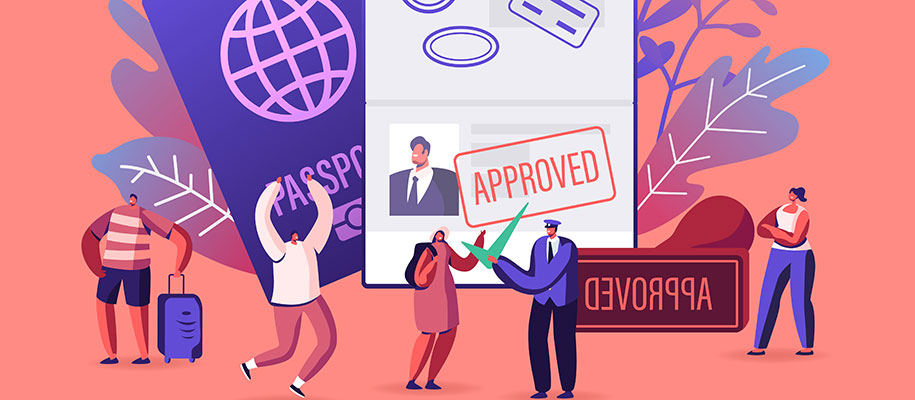
After you’re approved, the student visa application is done and you can safely travel to the US for your education. I wish everyone the best in their visa application and interview process!
Still looking for ways to fund your US education? Look for opportunities using our Scholarship Search tool, and check out this list of Great Scholarships, Fellowships, and Grants for International Students.